Six months ago somebody gave me the kind of advice that sounds simple until you try to follow it. "Stand on one leg," she said, "while you brush your teeth. Every single day." I lasted about a week before I got bored, and then honest with myself. I needed something to stand on that turned the whole exercise into a few minutes of actual work instead of a chore I kept finding reasons to skip. That is a confession, but it is also the truth, and the truth is where this review has to start.
That is how the ProsourceFit balance pad ended up in my small room, the spare bedroom where I do light strength work three days a week. I have used it almost every morning since. Here is what nobody tells you about it, including a few things I wish someone had told me before I ordered it. Some of it is good news and some of it is not, and I think you deserve both.
The Quick Verdict
A firm, low-cost pad that turned my balance work into something I actually did. Smaller than the photos suggest and firmer than you expect, but it stores flat and held up for six months of daily use.
Amazon Check Today's Price →Balance work you can do in your socks, in a spare bedroom
The ProsourceFit balance pad is the piece of gear I reach for most mornings. If you are 55 or over and want to keep your footing steady without a gym membership, this is a good place to start.
Amazon Check Today's Price on Amazon →How I've Used It
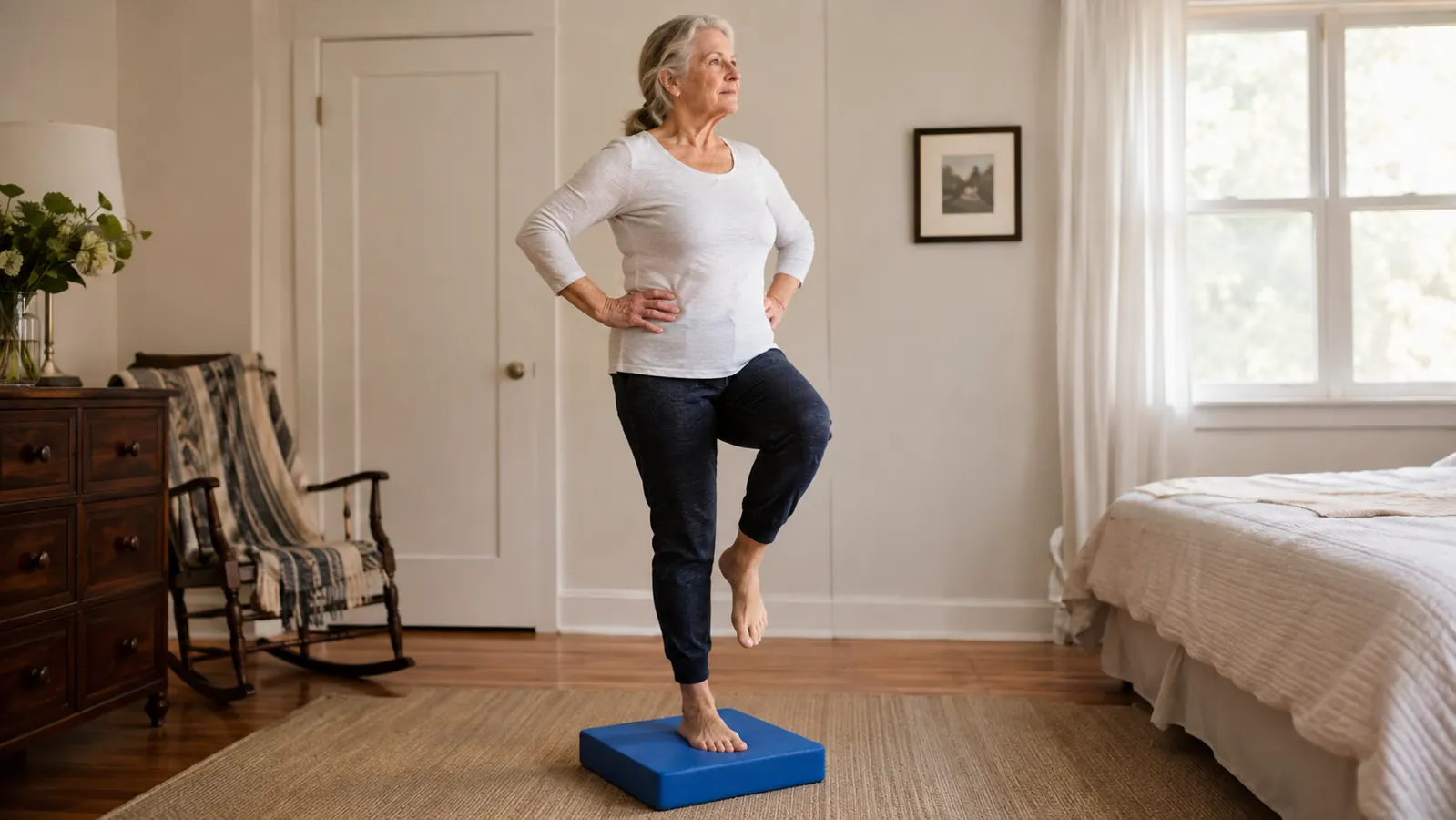
Most mornings I come back from my walk on the river trail, pour a coffee, and spend ten minutes on the pad before I do anything else. I do it barefoot, on the hardwood, on top of the mat that covers most of the floor. My routine is not complicated and it did not come from a plan or an app. Both feet on the pad first, hands on my hips, thirty seconds of just standing there and finding my center. Then one foot, twenty seconds, switch sides. Then a few slow toe taps and some side steps across the surface, the way you would step side to side on the ground, only now you are on something that moves a little under you.
I started in March and I was genuinely bad at it. I could hold one leg for about twenty seconds before my ankle wobbled and I stepped off. On a Tuesday in early April I made it to thirty-one seconds, wobbled, caught myself on the wall with my hand, and laughed out loud at myself in an empty house. By the end of April I could hold ninety seconds on my left leg and just over two minutes on my right, which has always been the stronger one. That is the whole story of this review, right there. It worked because I showed up and stood on it most days, and the pad gave me a reason to show up.
The knee is why I keep at it. My left knee complains on stairs and after long drives, and I have found that sitting still makes it worse and gentle, low-impact work makes it better. Standing on the pad while I do slow arm raises, or shifting my weight from foot to foot, does exactly that without any pounding or jarring. I also have a right shoulder I rehabbed after a fall in 2019, so I am careful about anything that shocks the joints. This pad does not shock anything. It just makes you work a little harder to stay still.
What Nobody Tells You About the Size and Feel
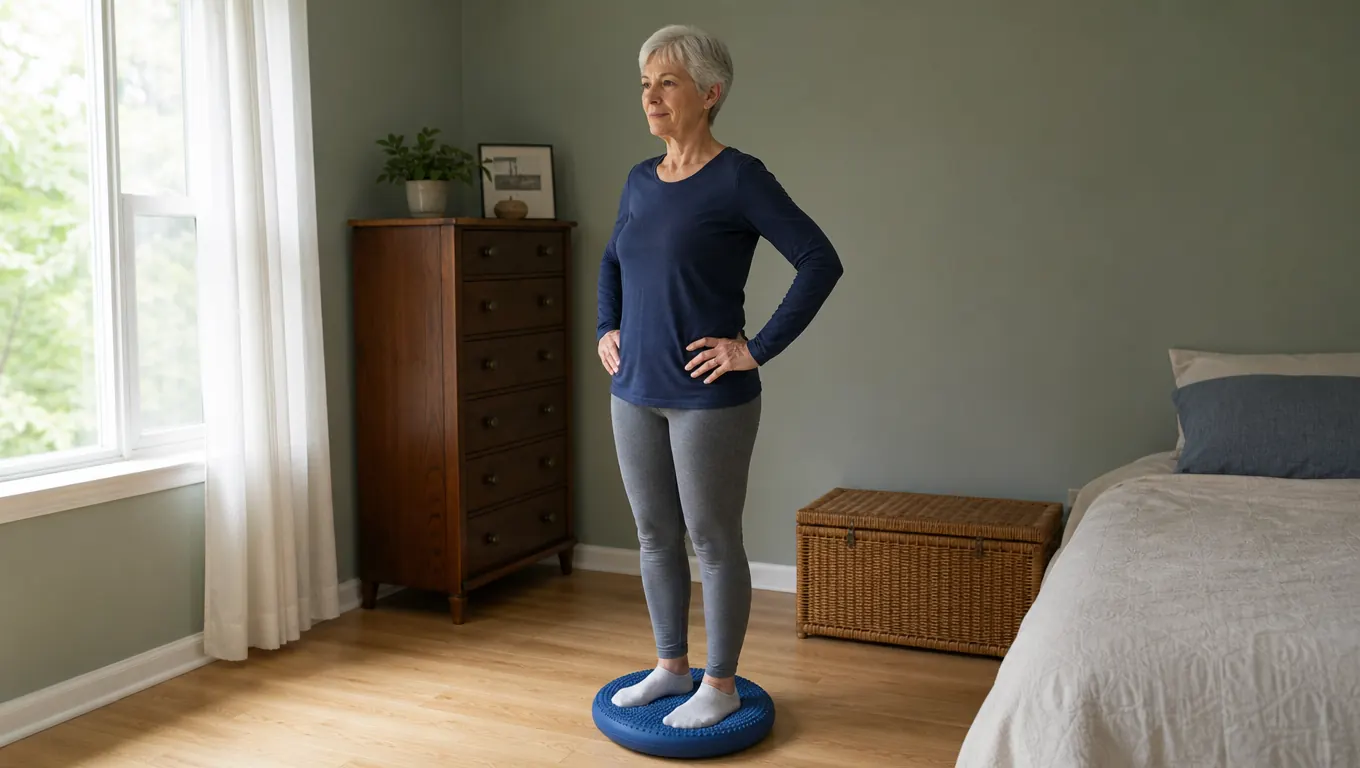
The first thing you notice when the box arrives is that the pad is smaller than it looks in the photos. It is about sixteen inches long and thirteen inches wide, and about two and a half inches thick. I put it on the floor next to the yoga mat I already owned and laughed, because it covers less than a third of that mat. That is fine for what it does. Both of my feet fit on it with a little room to spare. The thing the pictures hide is that a single foot fills most of the surface, so when you stand on one leg you are not standing on a big forgiving platform. You are balancing on a small one. That is the point, and it is also the thing nobody tells you.
The second thing nobody tells you is that it is firmer than the word "cushioned" suggests. It is not like a yoga mat, which gives way under your weight and lets you sink in. When I step onto this pad it squishes maybe half an inch, then holds firm. That firmness is what makes it good for balance work. You are not standing on a soft pillow, you are standing on a stable but slightly springy surface that moves just enough to keep your ankle and core busy. If you are hoping for something plush to stand on while you fold laundry or wait for the kettle, this is not it. It is a training tool, not a comfort mat, and you will be disappointed if you expect otherwise.
I also want to be honest about the box itself, because nobody tells you this either. The pad arrives packed tight, and it takes a little while to lie perfectly flat. For the first few days the corners curled up slightly where the foam remembered being folded. It settled within about a week, and I have not thought about it since, but I mention it because a flat pad matters when you are standing on one leg and a corner lifts.
What It Actually Helped With
Balance is the obvious one. I did not start with a specific number in mind, but I measured it anyway, because I wanted to know whether the pad was doing anything or whether I was just going through the motions. In March I could stand on one leg with my eyes open for about twenty seconds before my ankle started to shake. By the end of April that was ninety seconds on my left leg and just over two minutes on my right. I am not a physical therapist, so I will not claim the pad deserves all the credit. But the pad is what made me do the work every day, because standing on it is slightly harder and slightly more interesting than standing on the bare floor.
It also helped my ankles, which I did not expect. My ankles are not something I ever thought about until this pad. The gentle side-to-side wobble makes the small muscles around the ankle work in a way they never do on a flat, solid floor. I notice it most on Thursday evenings at my swing dance class. When we turn, I am not grabbing my partner as hard to keep my footing. That is a small thing, but it is a real thing, and it happened without me doing any ankle exercises on purpose. The pad just made my ankles work while I was standing there doing something else.
I have also used it as a surface for upper body work. Standing on the pad with a light weight in each hand and doing slow shoulder presses turns a boring exercise into one that also works my core and my ankles, because I have to keep myself steady the whole time. My right shoulder is the one I hurt in a fall in 2019, and I keep the weights light and the movement slow. The pad does not add any strain to the shoulder itself. It just makes everything else work a little harder to keep me upright, and that has made my strength work feel more useful, not less.
What It Will Not Do
Here is the honest part, and I wish more reviews would say it plainly. This pad is not a wobble board. It does not tip from side to side or front to back, and it will not give you the deep ankle range of motion you get from balancing on an arched dome. If your goal is to work your ankles in every direction, you want a different tool, and you should say that out loud before you buy this one. What the ProsourceFit pad gives you is a slightly unstable surface that makes your small stabilizer muscles work. That is a different job, and it is a useful one, but it is not the same job.
It will also not fix your balance by itself. Standing on the pad for ten minutes a day did help me, but only because I did it most days for months, and only because I was already healthy enough to stand on one leg for a few seconds. If you are looking for a product that does the work for you, this is not that product. And if you have a diagnosed balance disorder or a history of falls, please do not treat a foam pad as medical advice. Talk to a physical therapist first. I am a retired school administrator who stands on a piece of foam in her spare bedroom. I am not qualified to tell you what is safe for your specific body, and neither is the product listing.
One more honest limitation. It is not comfortable to stand on for long stretches. I tried using it while I folded laundry once, thinking it would behave like an anti-fatigue mat, the kind people stand on at the sink. It did not. After about ten minutes my calves were tired and I wanted the flat floor back. If you stand at a workbench or a kitchen counter all day and want something soft under your feet, a proper anti-fatigue mat is the better purchase. This pad is for short, focused balance work, and it is best when you treat it that way.
How It Holds Up After Six Months
I bought this pad six months ago, in the spring, and I have used it most mornings since. I am not easy on gear, or maybe I am just normal, but I expected the surface to wear down or the foam to crack somewhere around month six. It has not. The textured nubs on top are still there, and they still grip my bare feet and my socks. The foam has not gone brittle, and it has not flattened. When I press on it with my thumb it springs back the same way it did the first week, and that is more than I can say for several other pieces of equipment that have passed through this house.
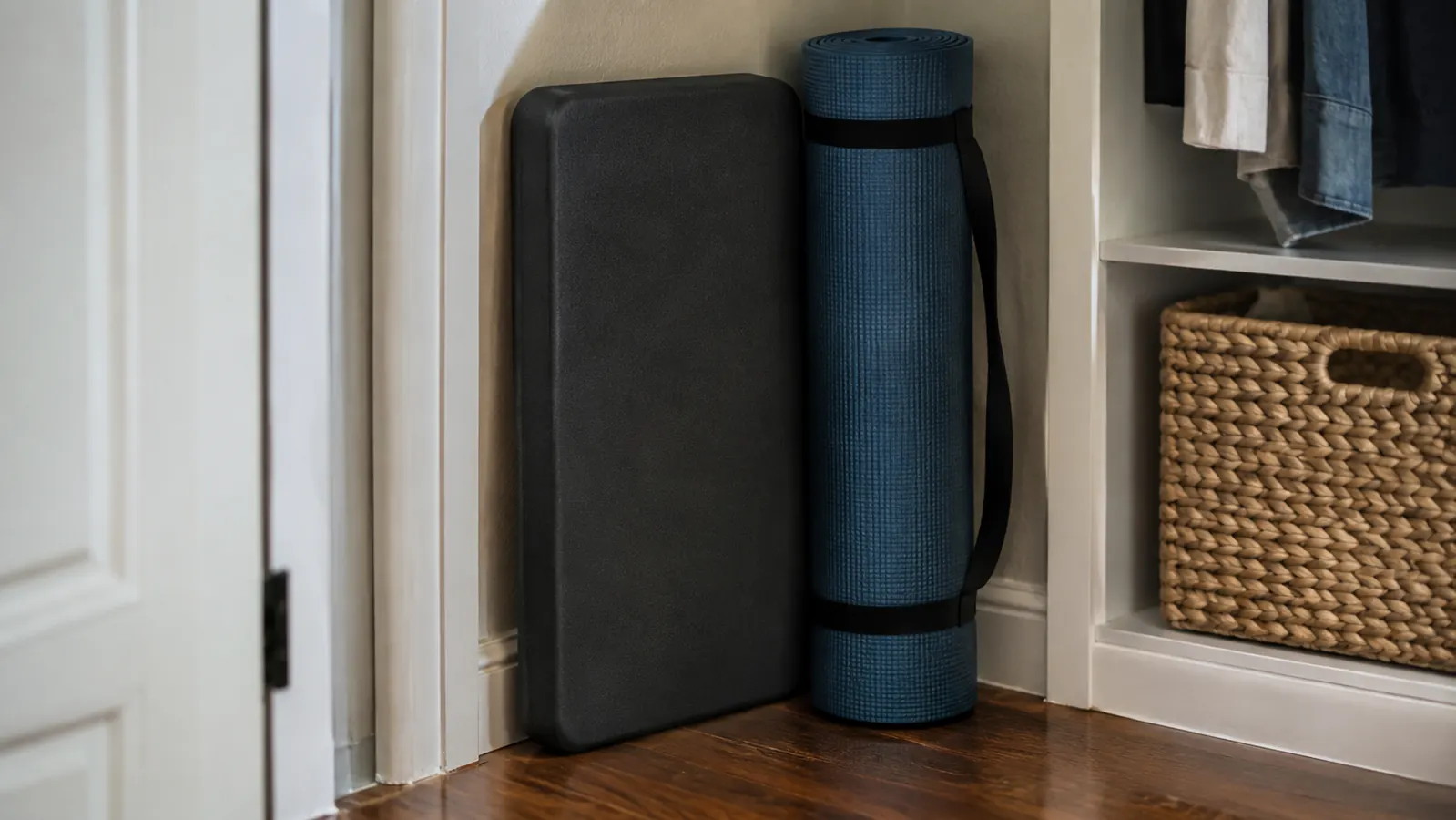
I store it flat, leaning against the wall in my closet or slid under the bed, because the small room is only about ten by eleven feet and everything has to live somewhere out of the way. The pad is thin enough that it disappears, and that matters to me more than it sounds like it should. A piece of gear I have to drag out of a corner is a piece of gear I stop using. This one takes three seconds to put on the floor and three seconds to put away.
The only maintenance it has ever needed is a damp cloth. The pad picks up dust and lint from the hardwood floor, so every couple of weeks I wipe it down and it looks new again. No special cleaner, no fuss, no creaking, no peeling. Is it the fanciest piece of fitness gear I own? No, it is a flat piece of firm foam with a textured top. But in six months of daily use it has not let me down, and I cannot say that about every piece of equipment that has come into this house. Some of it is in a box in the closet. The pad is still on the floor every morning.
What I Liked
- Firm, stable surface that still makes your ankles and core work
- Thin enough to store flat under a bed or in a closet
- Textured top grips bare feet and socks, even on a hardwood floor
- Easy to clean with a damp cloth, no special care
- Held up to six months of near-daily use without cracking or flattening
Where It Falls Short
- Smaller than the photos suggest; single-foot work fills the whole surface
- Firmer than the word "cushioned" implies; it is a training tool, not a comfort mat
- Does not tilt or wobble, so it is not an ankle range of motion tool
- Picks up dust and lint from the floor and needs an occasional wipe
The single-leg stand that took me twenty seconds in March took me ninety seconds by April. That is the whole review in one number.
Who This Is For
If you walk most days, the way I do, and you want a cheap way to keep your balance sharp at home, the ProsourceFit pad is a good fit. It is for the person who is not training for anything, who just wants to keep gardening, keep dancing on Thursday nights, keep carrying her own groceries up the front steps without grabbing the railing. It is for the person with a spare bedroom or a corner of the living room, because it stores flat and takes up almost no space. It is for the person who knows that a ten minute habit is more useful than a forty minute plan she will abandon by February.
It is also for the person who would rather do a boring ten minutes of balance work now than wait for a fall to make the point later. That is why I bought it. Somebody suggested standing on one leg while I brushed my teeth, and I needed something that made the exercise feel like a small project instead of a reminder that I am sixty-two. The pad gave me that, and I think it can give you the same thing if you let it.
Who Should Skip It
If you have a diagnosed balance disorder, vertigo, or a recent injury, do not start with a foam pad. Go see a physical therapist and let them tell you what is safe for your body. If you want a wobble board for deep ankle work in every direction, this is not it, and you will be disappointed by how stable the pad actually is. If you spend your workday standing and you want relief under your feet, buy a proper anti-fatigue mat instead. And if you already stand on one leg every day and you are not bored of it, the pad adds a little difficulty but not a lot. It is a gentle tool, and I mean that as a compliment. It is not a challenge for someone who has already mastered single-leg balance, and pretending it is would be dishonest.
Still the first thing I reach for most mornings
If you are on the fence, my honest answer is that the ProsourceFit pad is a small, firm, low-cost piece of gear that does exactly one job and does it well. It will not wobble, it will not wear out quickly, and it will not fix anything by itself. It just gives you a good reason to stand on one leg most mornings. In my house, that has been worth more than it sounds like.
Amazon Check Today's Price on Amazon →