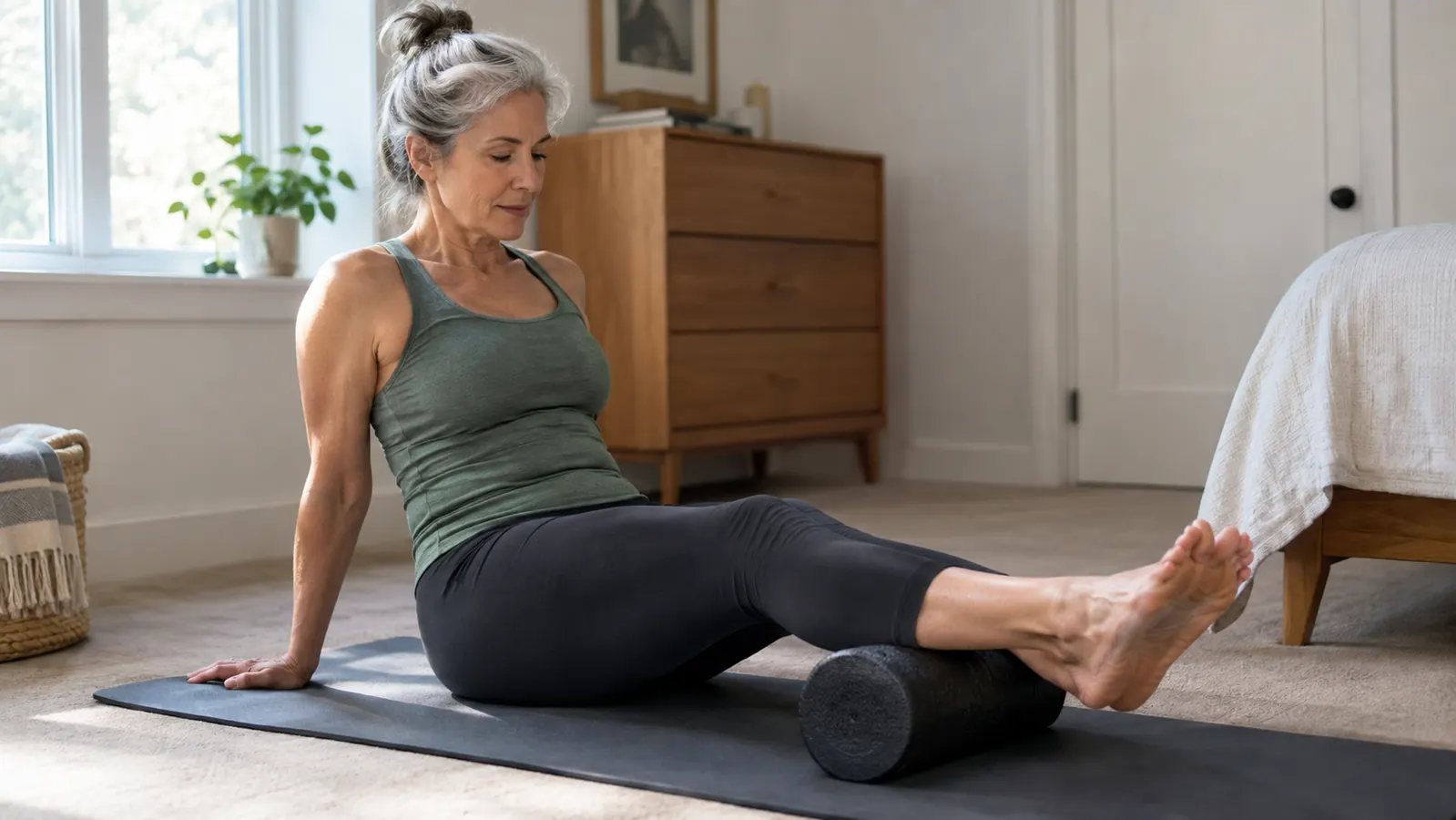
After a three mile walk on the river trail, my calves feel like ropes. The backs of my thighs are tight, and my left knee, the one that complains on stairs, is talking to me. For years I just sat on the couch and hoped it would sort itself out. Then a friend lent me her percussion massage gun, and I bought the TRIGGERPOINT Grid foam roller, and I spent a month comparing the two on my own legs.
The short answer is that both of them work, and they work on different things. If you walk as much as I do and your whole leg feels tight, the roller wins. If you have one stubborn spot you can find with a finger, the gun wins. I kept the roller. Here is the honest version of how I got there, and the details I wish somebody had told me before I started.
| TRIGGERPOINT Grid | Massage Gun | |
|---|---|---|
| What it does best | Long, slow passes over a whole muscle group | Focused pressure on one specific spot |
| Power source | None. Your body weight provides the pressure | Rechargeable battery, needs charging after a few sessions |
| Noise | Silent | A steady buzz while it runs |
| Learning curve | Hard to get wrong, but takes a few tries to feel natural | Several speeds and heads to choose from |
| Reaching your own shoulder | Awkward, you have to lie on the floor and shift | Hold it in your other hand and aim |
| Storage | Slides under a bed or into a closet corner | Fits in a drawer with its carry bag |
| Best for | Tight legs after a long walk, whole calves and hamstrings | One stubborn knot you can feel with your thumb |
How I Compared Them
I did not trust my memory, so I made it a fair test. For two weeks I used the roller on my left leg and the gun on my right leg after the same morning walk. Same route, same time of day, same distance. Then I switched sides for two more weeks so neither leg got the easy treatment. I kept notes on a sticky note stuck to the bathroom mirror and rated how my legs felt getting up the stairs every evening.
The roller took practice. The first few times I wobbled and felt awkward, so I watched a couple of short videos and started on my calves before moving up to my thighs. By the end of the first week I had a rhythm: thirty seconds per pass, slow and steady, three passes per muscle. My left knee only gets pressure on the calf and the back of the thigh, never directly on the joint, and I keep it light.
The gun was easier to pick up. You hold it, aim it, and it does the work. My friend's gun had four speeds and four heads, and I mostly used the round one on medium. But it buzzes, the battery runs down after a few sessions, and I found myself avoiding it on days when I did not feel like standing there holding it. The roller asks for less of me. I lie down and let my weight do the pressing.
One morning in late April, after a long walk on a wet trail, my right calf was knotted. I used the gun on it for five minutes and it helped. The next morning I did the same walk and used the roller on the left calf. Both legs loosened up, but the roller side felt looser getting up the stairs, and that is the test that mattered to me.
I picked the first Tuesday of March to start because my swing dance class on Thursday evenings was the perfect test. If I could get through two hours of dancing without my calves complaining, the tool that week had earned its place. I marked the sticky note with a T for roller weeks and a G for gun weeks, and the roller weeks won six out of eight.
What a Foam Roller Actually Does
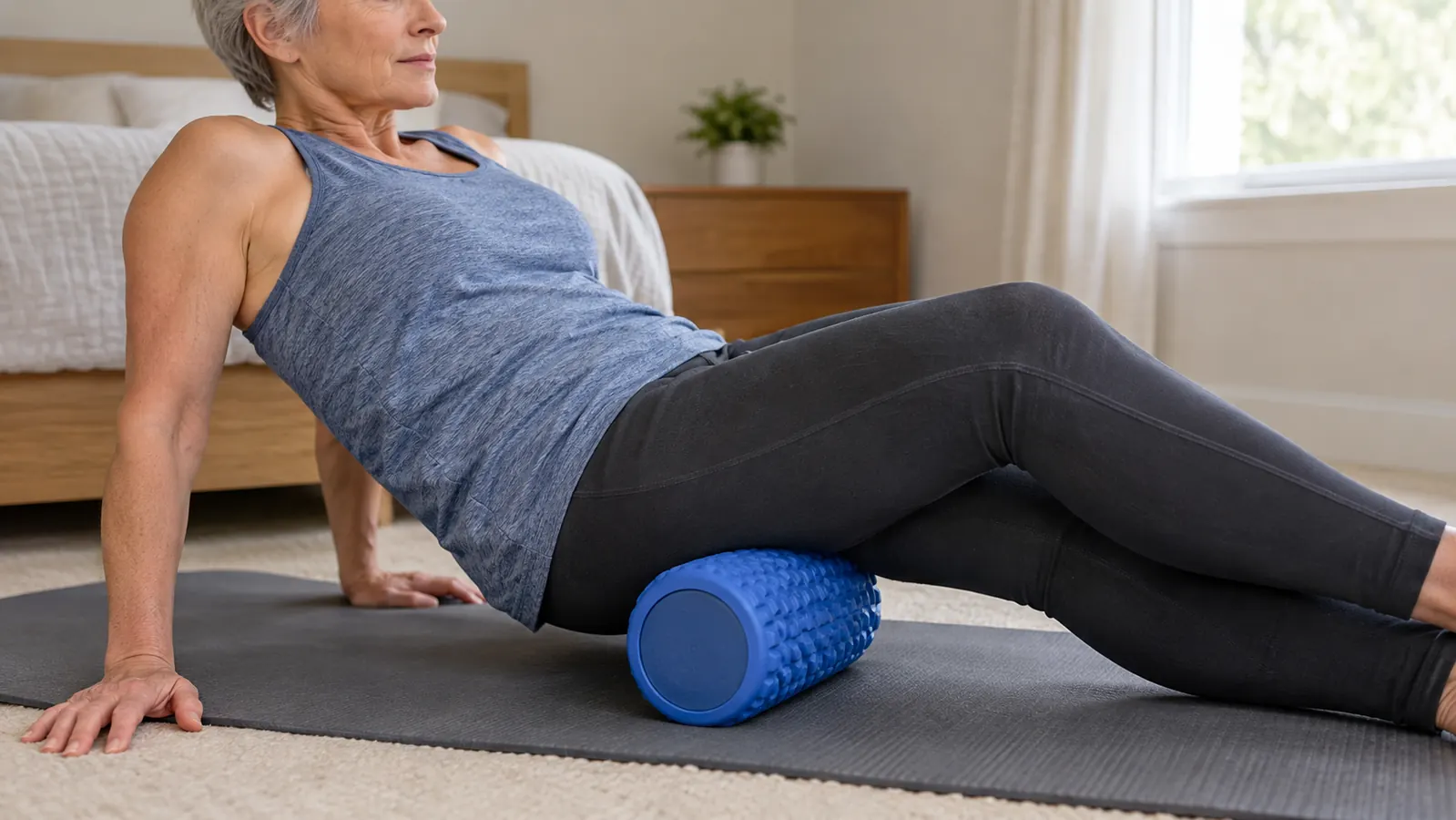
A foam roller is a firm cylinder you lie on. The TRIGGERPOINT Grid is 13 inches long and about 5 inches around, with a firm core and a softer outer layer. The idea is simple: your body weight presses the muscle against the roller, and rolling slowly along the muscle works out the tightness the same way a thumb might, only across a much bigger area.
It looks boring, and that is the point. There is nothing to plug in, nothing to charge, nothing to break. The grid pattern on the surface grips your skin so you do not slide, and the firm core means it does not squash flat under a grown adult. I weigh enough that a cheap hollow roller would bottom out, and this one does not.
The learning curve is real but short. You start on the floor, on a mat, and you move slowly. I found that ten minutes covered my calves, my hamstrings, and my low back, which are the parts that complain after a walk. The first week I was sore in places I did not know were tight, which is normal, and it settled down.
The size surprised me. Thirteen inches sounds short until you lie on it, and then it is exactly the length of a calf. For my low back I position it at the base of my spine and let my weight settle, and for my hamstrings I sit on it and walk my hands back. Each position took me about a week to get comfortable with.
Where TRIGGERPOINT Wins
The biggest difference is coverage. The Grid is long enough that I can lie on it with my weight spread across a whole calf or the back of a thigh. One slow pass, top to bottom, covers more ground than ten minutes of aiming a gun at one spot. My legs are tight all over after a walk, not tight in one place, so the roller matches the problem.
There is nothing to charge and nothing to hold. My body weight sets the pressure, and I can ease off by shifting an inch. It is silent, so I use it while I listen to the radio. The Grid has a firm core with a softer outer layer, and it is sturdy enough to take my full weight without bottoming out. After six months of near daily use, it looks the same as the day it arrived.
The firm core matters to me because of my left knee. I am not aggressive with it. I keep the pressure steady and slow, and I stop the moment something feels sharp. That control, the fact that I decide the pressure with my own weight, is why I trust the roller more. A machine sets its own pressure and it is easy to hold it too long on one spot.
It also stores away better than I expected. The small room is about ten by eleven feet, with a hardwood floor and a mat over it. When I am done, the roller slides under my bed and I forget it is there. No cords, no case, no battery to top up before I need it.
I also like that there is nothing to learn about speeds and attachments. The gun has four settings and I never used more than two of them. The roller has one setting, the one my own body chooses, and that simplicity is part of why I reach for it on a tired morning.
Where the Massage Gun Wins
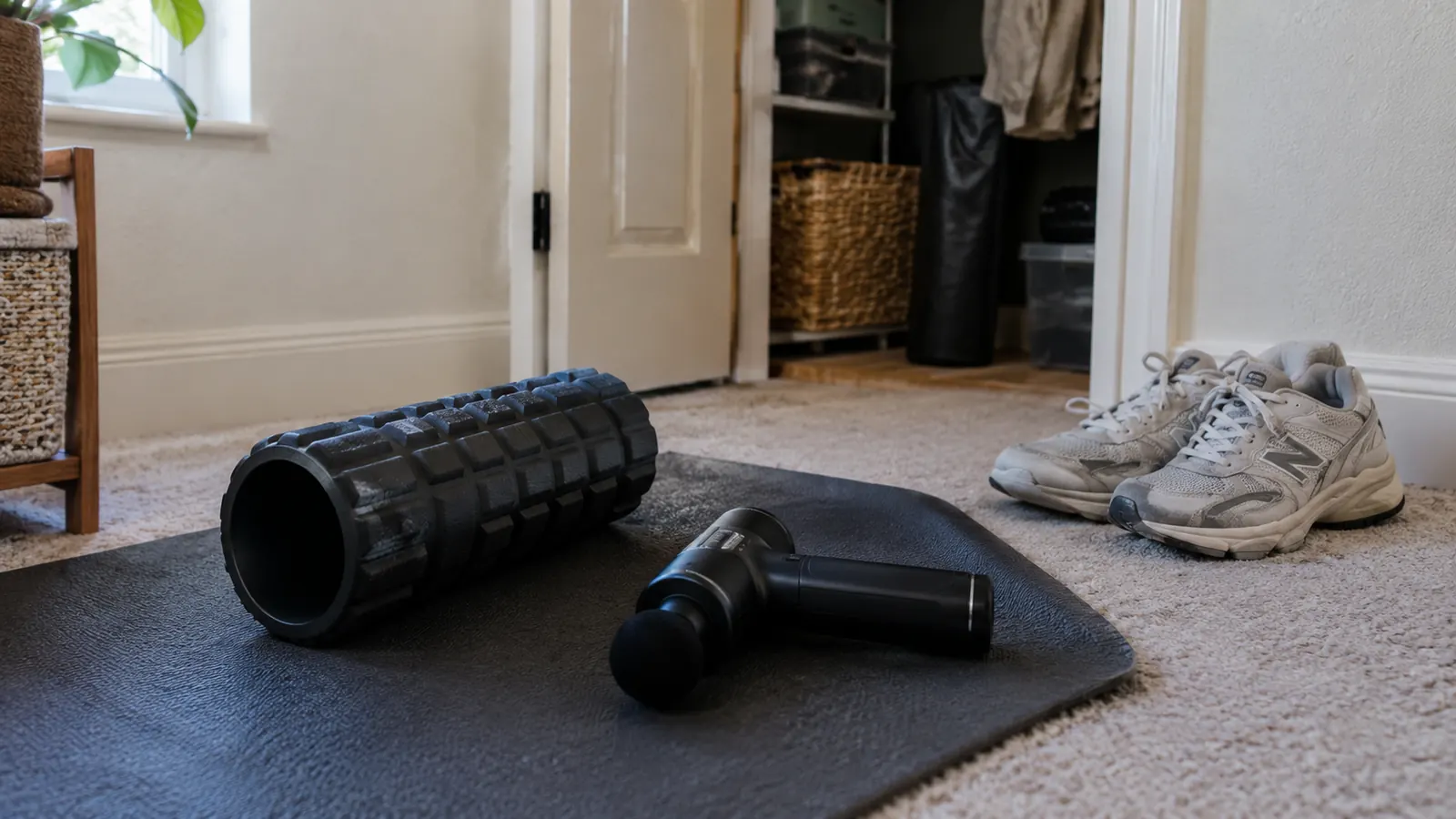
It would be a rigged review if I pretended the gun lost everything. It is better at one thing, and it is honest to say so. When I have a single knot, a spot about the size of a quarter that I can feel with my thumb, the gun finds it faster and deeper. The roller needs me to angle my whole body to put weight on that exact place, and that is clumsy.
The gun is also better for my right shoulder, the one I rehabbed after a fall in 2019. Reaching a shoulder with a roller means lying on the floor and wiggling. The gun I can hold in my other hand and aim exactly where it hurts. It is smaller too, and it fits in a small bag if you travel.
But the gun asks for things the roller does not. It needs charging, and I am the kind of person who forgets to plug things in. It makes noise, so it is not the tool I want on when the radio is on. And because the pressure is set by the machine, it is easier to overdo it. I borrowed my friend's gun for a month and gave it back clean.
If you travel, the gun is easier to pack. The roller is not heavy, but it is thirteen inches long and it does not bend. I keep the comparison honest because I know somebody reading this will need that. For me, the battery and the noise tipped the balance, but I can see the other side of it.
The roller side felt looser getting up the stairs. That is the test that mattered to me.
The roller that handles a whole leg in one pass
After a month of testing both on my own legs, the TRIGGERPOINT Grid is the one I reach for after every walk. It covers my calves, my hamstrings and my low back in about ten minutes, needs no battery, and slides under my bed. If your legs feel tight all over, this is the tool.
Amazon Check Today's Price on Amazon →Things I Learned the Hard Way
Start slow. The first time I used the roller I went too hard and my calves ached the next day, which sent the wrong message to my knee. Now I start with thirty seconds per pass and build up to ninety, and I never roll directly over the knee joint or the small of the back. Slow beats strong every time.
Use it on the floor, not on the bed. My mattress is too soft and swallowed all the pressure. On the mat over the hardwood floor it works the way it is supposed to. I also learned to keep the roller dry and clean, because the grid pattern grips better when it is not dusty from the closet.
You do not need both tools. That is the honest conclusion after a month. If you can only buy one, buy the roller, because it covers more of the problem on more days. Keep the gun idea in the back of your head for the day a knot shows up, and borrow one then.
The other thing I learned is to use the roller before a walk too, not just after. A light pass on my calves before I head out loosens me up and makes the first half mile easier. It is ten minutes well spent, and it means I am not starting a three mile walk already tight.
Who Should Buy Which
If your legs feel tight all over after a walk, buy the roller. If you have one specific spot that bothers you every single day, buy the gun. If you can only afford one, buy the roller, because it covers more of the problem on more days. I bought the TRIGGERPOINT and I have not once wished I had bought the gun instead.
The gun I used belonged to my friend, and I gave it back. Most mornings I do not even think about it. I unroll the mat, lie down, and spend ten minutes on the roller, and the next morning my legs feel like they belong to me again. That is the whole review, in plain words.
One more note for people our age: this is not about pushing through pain. If a muscle is genuinely hurt, a roller will not fix it and neither will a gun. See someone about that. The roller is for the tightness that comes after a good walk, the kind that makes stairs feel easier the next morning. That is what it does for me, every single day.
And if you are wondering about my left knee, the roller has been a friend to it. I am careful, I keep the pressure light over the calf and the back of the thigh, and I have not had a morning where I dreaded the stairs since I started. That is the result I can measure, and it is why this review is not neutral.
Still weighing the two? Start with the roller.
The TRIGGERPOINT Grid does the job a walk leaves behind. It is sturdy, silent, and it will still be under your bed in three years. If a stubborn knot ever shows up, borrow a friend's gun for that one spot.
Amazon Check Today's Price on Amazon →