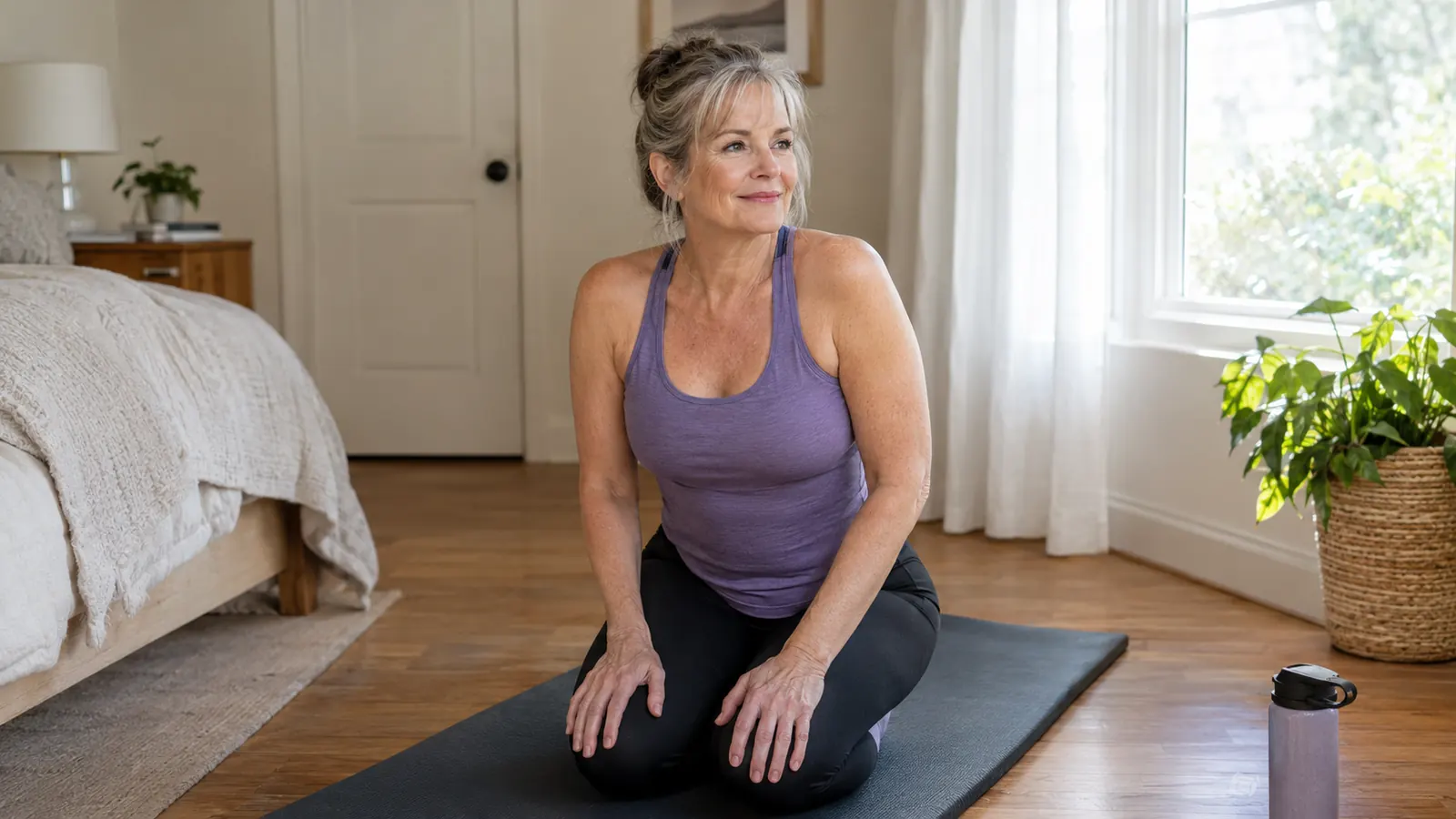
I bought the Fitvids 1/2-inch exercise mat in March, mostly because my left knee had started complaining during floor work. I do light strength training three days a week in my spare bedroom, which has a hardwood floor, and after a few months of kneeling and lying on it, I could feel every plank. Six months later, the mat is still in daily use. I have strong opinions about it, and I will tell you exactly what they are.
I am 62 years old, retired, and I am not training for anything. I walk three or four miles most mornings, I take a swing dance class on Thursday nights, and I do about twenty minutes of light strength work in the small room three days a week. The goal is simple: I want to keep gardening, keep dancing, keep carrying my own groceries. Everything in that room has to earn its place because the closet is small. The Fitvids mat earned its place.
The Quick Verdict
A thick, stable mat that has held up through six months of daily use on a hardwood floor. The cushioning is real, the value is fair, and the only real limitation is a smooth top surface that is not ideal for fast, high-impact moves.
Amazon Check Today's Price →The mat that quieted my knee on a hardwood floor
After six months of three-days-a-week use, the Fitvids 1/2-inch mat is still doing its job. If you work out at home on a hard floor, this is the one I would buy again.
Amazon Check Today's Price on Amazon →How I've Used It
I use the Fitvids mat three days a week, usually mid-morning, in a spare bedroom that is roughly ten by eleven feet. The floor is original hardwood from the 1960s, and before I bought this mat I used a thin cotton rug that slid around. That rug was the reason my knee started bothering me during floor work. The Fitvids mat stays put.
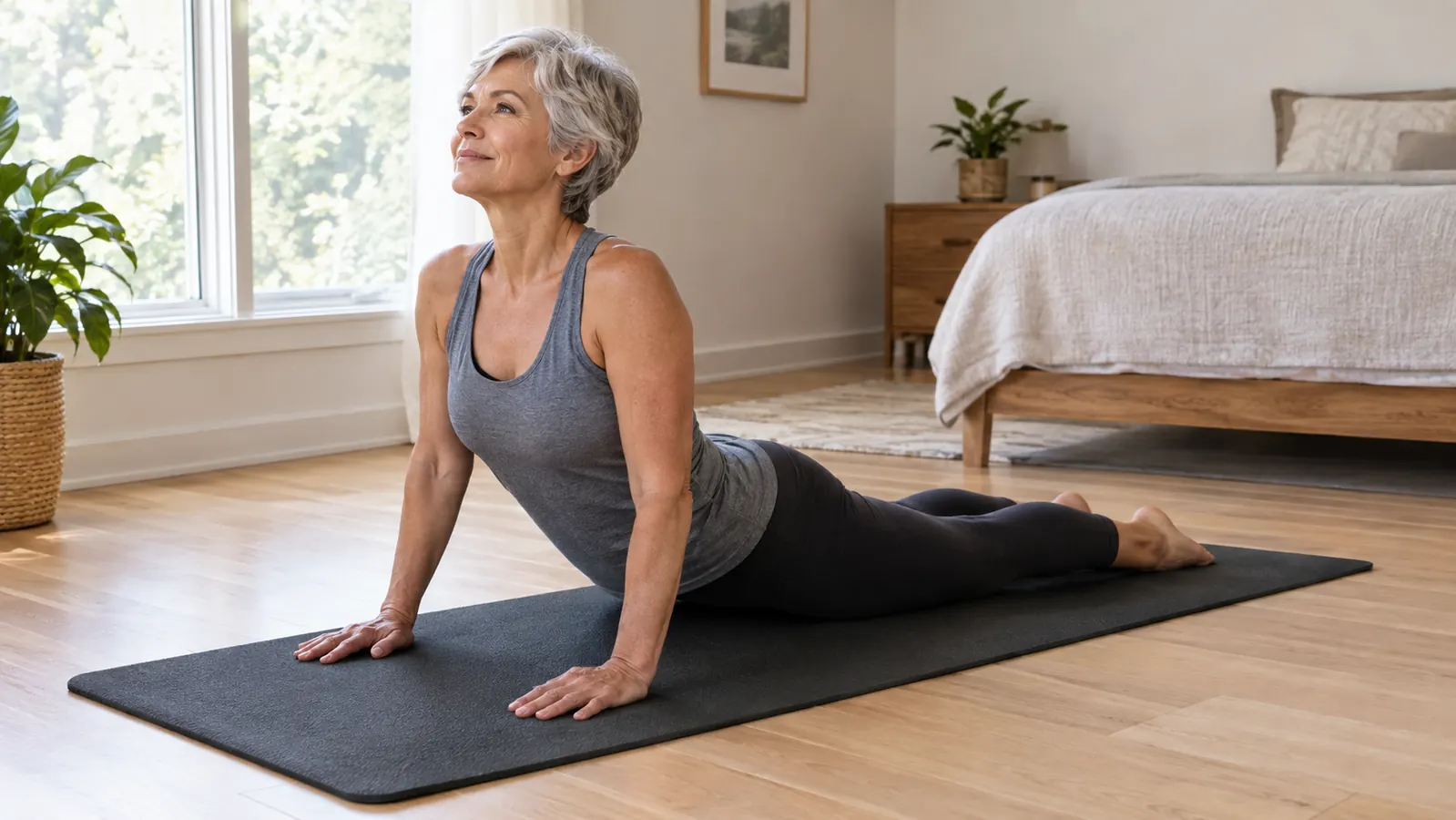
My routine is modest. I do a set of knee push-ups against a low stool, some bridges, a few standing balance exercises, and then I spend ten minutes on the floor doing core work. That last part is where the mat earns its keep. Lying on a bare hardwood floor for ten minutes is miserable. On this mat, it is fine. The half-inch of foam is enough that I do not feel the boards under my hips or elbows.
The mat also gets used for my shoulder work, which matters to me because I rehabbed my right shoulder after a fall in 2019. I do wall slides and some lying shoulder extensions on the mat. The cushioning matters there too, because lying on my side on a hard floor puts pressure on my shoulder blade. The mat makes those exercises comfortable enough that I actually do them.
I do the floor work last, after the standing exercises, because that is when my body is warmest. The mat is already on the floor, so I just lie down and get to work. Some mornings I tell myself I will skip the core work and just do the standing exercises. I have not skipped it once since the mat arrived, and I think the comfort is the reason.
Why the Thickness Matters After 55
The spec sheet says this mat is half an inch thick, and it is. That thickness is the whole reason I bought it. The thin mats I have used in the past, the ones you roll out for yoga in a studio, are fine when you are twenty-five and your joints do not complain. At my age, lying on a thin mat over a hardwood floor means my hips ache and my elbows go numb during floor work.
The Fitvids mat is made of high-density foam, which is a way of saying it compresses a little but does not flatten out. After six months of daily use, the spots where I lie are not worn down. The mat still measures about half an inch thick across the middle, where my hips and shoulders rest most days. I checked it with a ruler last week, because I was curious whether the foam would settle. It has not. That is the detail that tells me the foam is good quality and not just thick.
I should also say the thickness helps with balance work. When I stand on the mat for my balance exercises, I have a little give under my feet, which makes me work slightly harder to stay steady. That sounds like a downside, but it is actually training my ankles and knees to respond. It is the kind of small thing that keeps me doing it.
Grip and the Hardwood Floor Question
The biggest question I had before buying was whether a half-inch mat would slide on a hardwood floor. The answer, in my experience, is no. The bottom of the Fitvids mat is a textured surface that grips the wood well. In six months I have never had it slide out from under me during a bridge or a plank.
The top surface is a different story. The mat is not what I would call tacky. It is smooth, which makes it easy to clean and comfortable against bare skin, but it is not grippy like a rubber yoga mat. If you are doing moves where your hands or feet need to stay planted, like mountain climbers, you will feel some slip. I do not do those moves, but I mention it because it is the one real limitation I have found.
For my purposes, the top grip is fine. My hands stay in place for knee push-ups, and my feet stay planted for balance work. I have not once felt like I was going to slide during a move. If you are doing higher-intensity interval work on this mat, the kind where you are moving fast and changing directions, you might notice the slip more than I do.
The Carrying Strap and Storing It Away
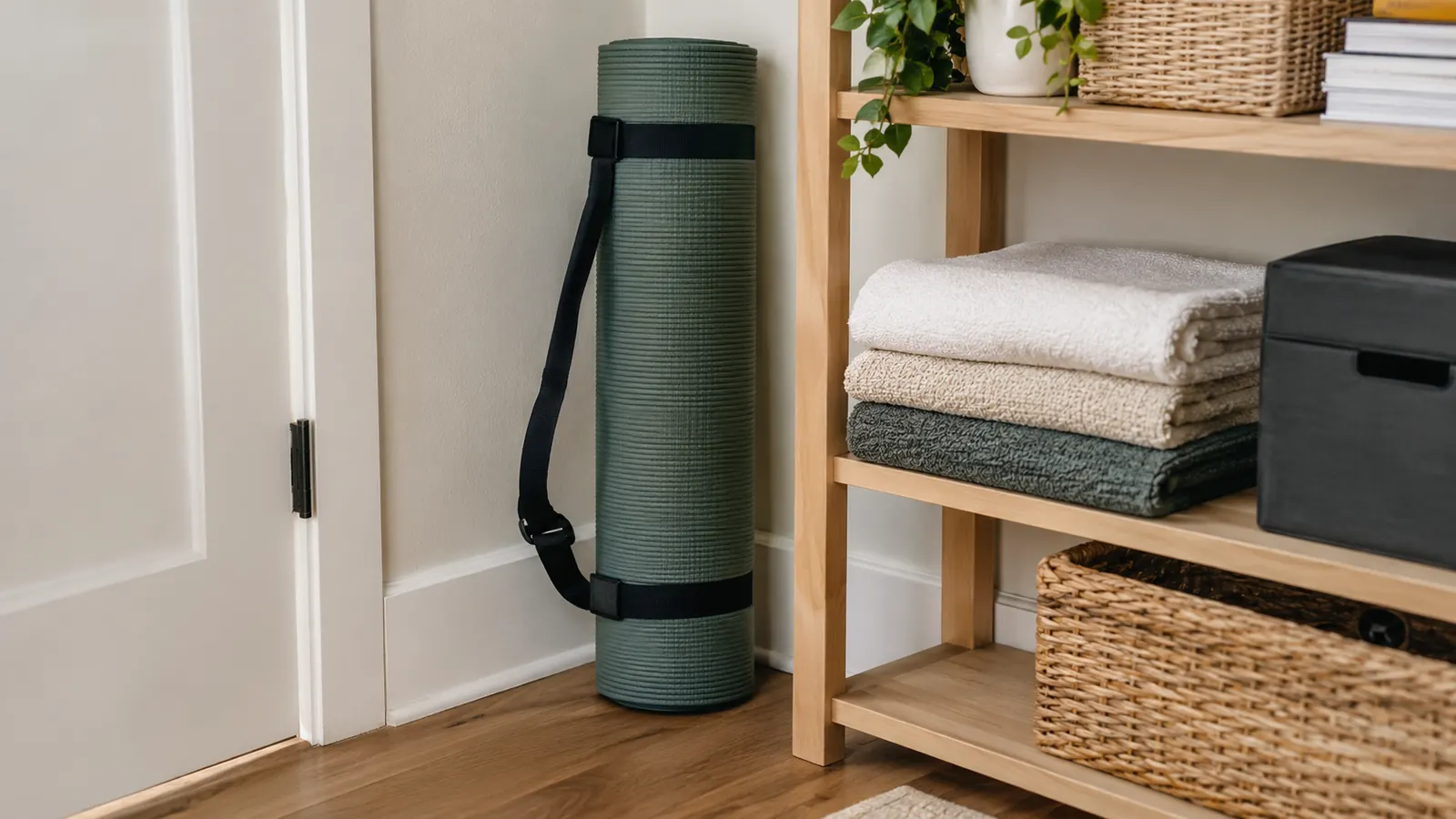
The mat comes with a carrying strap, which I thought I would never use because the mat lives in my spare bedroom. It turns out I use it every week. When I want to do floor work in the living room in front of the television, I roll the mat, snap the strap around it, and carry it down the hall. The strap is wide enough that it does not dig into my shoulder.
Rolling the mat up is easy. The Fitvids mat rolls tightly and stays rolled, which is not true of every thick mat I have tried. The cheaper ones tend to curl at the ends and fight you. This one rolls into a neat cylinder about a foot and a half long, and it stands upright in the corner of my closet without falling over.
The mat is heavier than a standard yoga mat, which surprised me. The foam is dense, and dense foam weighs more. That is a tradeoff. It is not something you would want to carry to a gym every day, and if you have arthritis in your hands, the weight might be a real problem. For a home mat that stays in one room, the weight is actually a sign of quality.
How It Compares to the Thin Mats I've Owned
Before this Fitvids mat, I owned two cheap yoga mats from a big box store, the kind that roll up into a thin tube. They were fine for the first month. Then the foam started to flatten where I sat, and the surface began to peel at the edges. Neither of them lasted a year. The Fitvids mat has already outlasted both of them, and it is still going.
The difference is the density. The cheap mats are made of soft foam that compresses quickly. The Fitvids mat is high-density foam, which means it is firmer and does not give way under your weight. Firmer sounds like it would be less comfortable, but it is actually the opposite. A mat that is too soft lets your hip bones sink down to the floor, which is exactly what you are trying to avoid.
I have also tried a friend's rubber mat. The rubber mat had better grip on top, no question. But it was heavy, it smelled strongly of rubber for weeks, and it was harder to roll up. For my needs, the Fitvids mat is the better balance of comfort, grip and weight, and it does the job with a fraction of the fuss.
What Six Months of Daily Use Looks Like
I am writing this in September, six months after I bought the mat in March. It has been used three days a week, every week, and it still looks close to new. The surface has no cracks or tears. The edges have not curled. The strap still snaps shut. I am not gentle with it, either. I kneel on it, lie on it, and stand on it with my walking shoes on, and it takes all of it.
The one cosmetic issue is dust. The surface shows every piece of dust that settles from the rest of the house. I wipe it down with a damp cloth every couple of weeks, and it looks fine again. That is not a complaint, just a heads up.
I also dropped a small dumbbell on it once, the two-kilogram kind I use for shoulder work. The dumbbell landed on the edge of the mat and left a small dent. The dent did not affect the mat's function, and it mostly bounced back within a week. I mention it because it tells you the foam is dense enough to recover, which is what you want.
The bottom texture has held up too. Some mats lose their grip as the backing wears down, but the Fitvids mat still grips the floor exactly as it did in March. I checked it specifically this week by doing a plank and watching the edges. Nothing moved.
What I Liked
- Real half-inch cushioning that protects knees, hips and elbows on a hardwood floor
- Stays put on hardwood, no sliding even during bridges and planks
- Rolls up tight and stores easily with the included carrying strap
- Held up well through six months of three-days-a-week use
- Easy to wipe clean
Where It Falls Short
- Top surface is smooth, not grippy, so hands and feet can slip during fast moves
- Heavier than a standard yoga mat, not great for carrying to a gym
- Shows dust and needs regular wiping
The half-inch of foam is the whole point. Six months in, it is still half an inch, and that is why my knee stopped complaining.
Who This Is For
If you are over fifty, you work out at home, and your floor is hard, this mat is for you. The cushioning is the feature that matters most at our age, and this mat has it. It is also a good choice if you are a larger person, because the high-density foam does not flatten out under extra weight.
This mat is also for people who want something that will last. Six months of daily use has not worn it out, and I expect to get years out of it. I have had exercise equipment that gave up after a season, and I hate buying the same thing twice. This mat does not feel like one of those purchases. The value is fair for what you get, and the carrying strap means you are not locked into one room.
If you do yoga, this mat works, though it is thicker than the mats most yoga teachers recommend. If you do gentle strength work, like I do, it is ideal.
It is also a good option if you are just starting a home workout routine and you are not sure what you need. A thick mat is one of the few pieces of gear that makes a real difference on day one. You will feel the cushioning the first time you kneel on it.
Who Should Skip It
If you do fast, high-impact workouts, this is probably not the mat for you. The top surface is smooth, so your hands and feet can slide during mountain climbers, burpees or anything where you need a firm grip. A rubber mat would be better for that kind of work.
If you travel with your mat or carry it to a gym every day, the weight will annoy you. This is a home mat. It belongs in a spare room, not in your car.
And if you already have a thick mat you are happy with, there is no reason to switch. This is a very good mat, but it is not magic. It is just thick, stable foam that does exactly what it is supposed to do.
If you do most of your workouts on carpet or a padded floor, you may not need this mat at all. The cushioning matters most on hard surfaces. On carpet, a thinner mat or no mat at all will do the same job.
Six months in, I would buy it again
If you work out at home on a hard floor and your joints are starting to complain, the Fitvids mat is a straightforward fix. It cushions, it stays put, and it has held up through six months of real use.
Amazon Check Today's Price on Amazon →