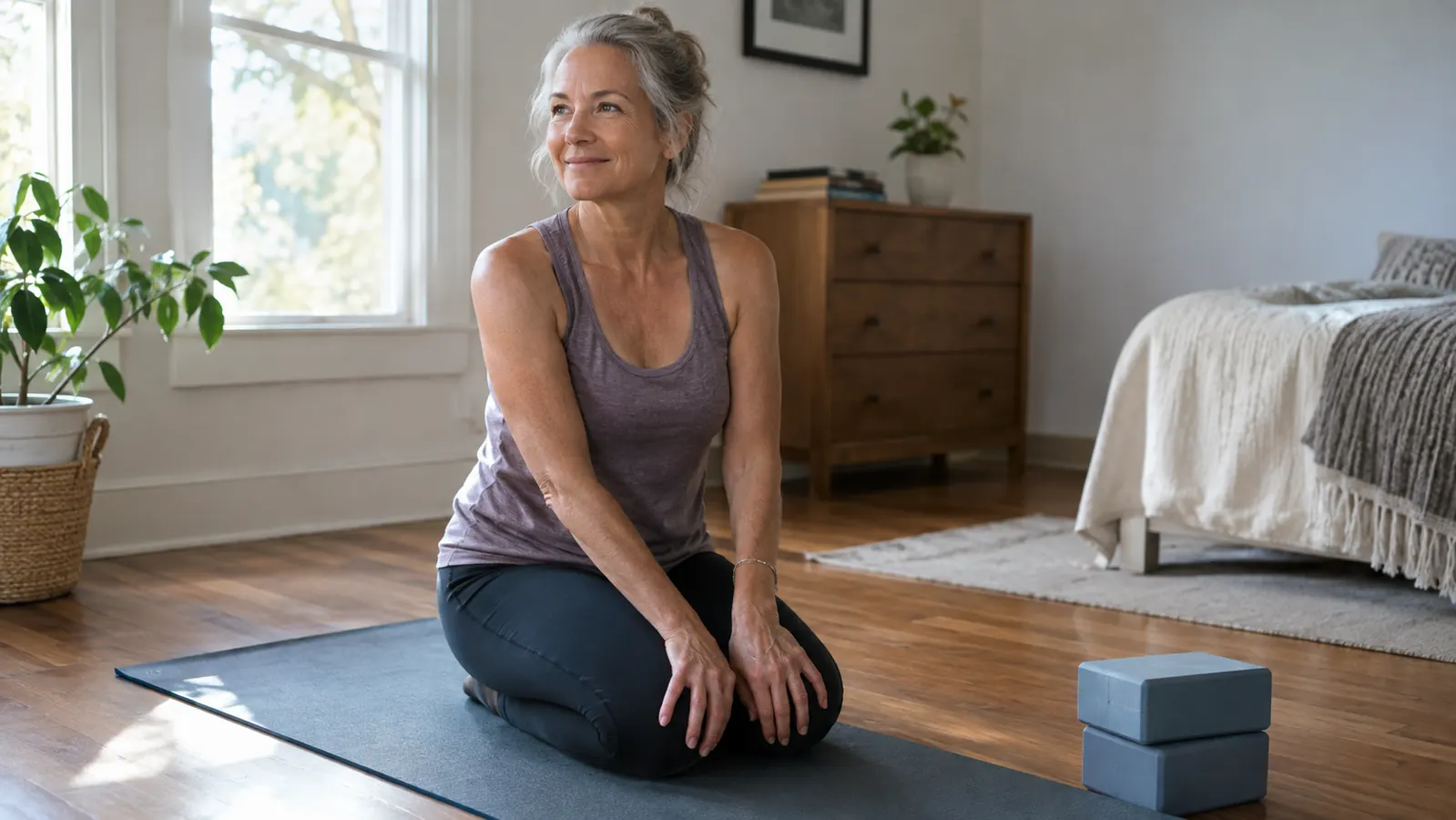
When I turned 62, I stopped taking my hardwood floor for granted. My left knee complains on stairs and after long drives, and the small room where I do light strength work has a floor that does not give at all. I put a Fitvids mat down last spring, and it changed more than my comfort.
This is not a story about becoming an athlete. It is about staying able to garden, dance on Thursday nights, and carry my own groceries. Here are ten reasons a thick exercise mat earns its place on a hard floor, based on daily use since April.
Give your joints a softer place to land
A half-inch of cushion under you on a hardwood floor is the cheapest knee protection I own. The Fitvids mat is thick enough to feel it immediately.
Amazon Check Today's Price on Amazon →It puts real cushion under your knees
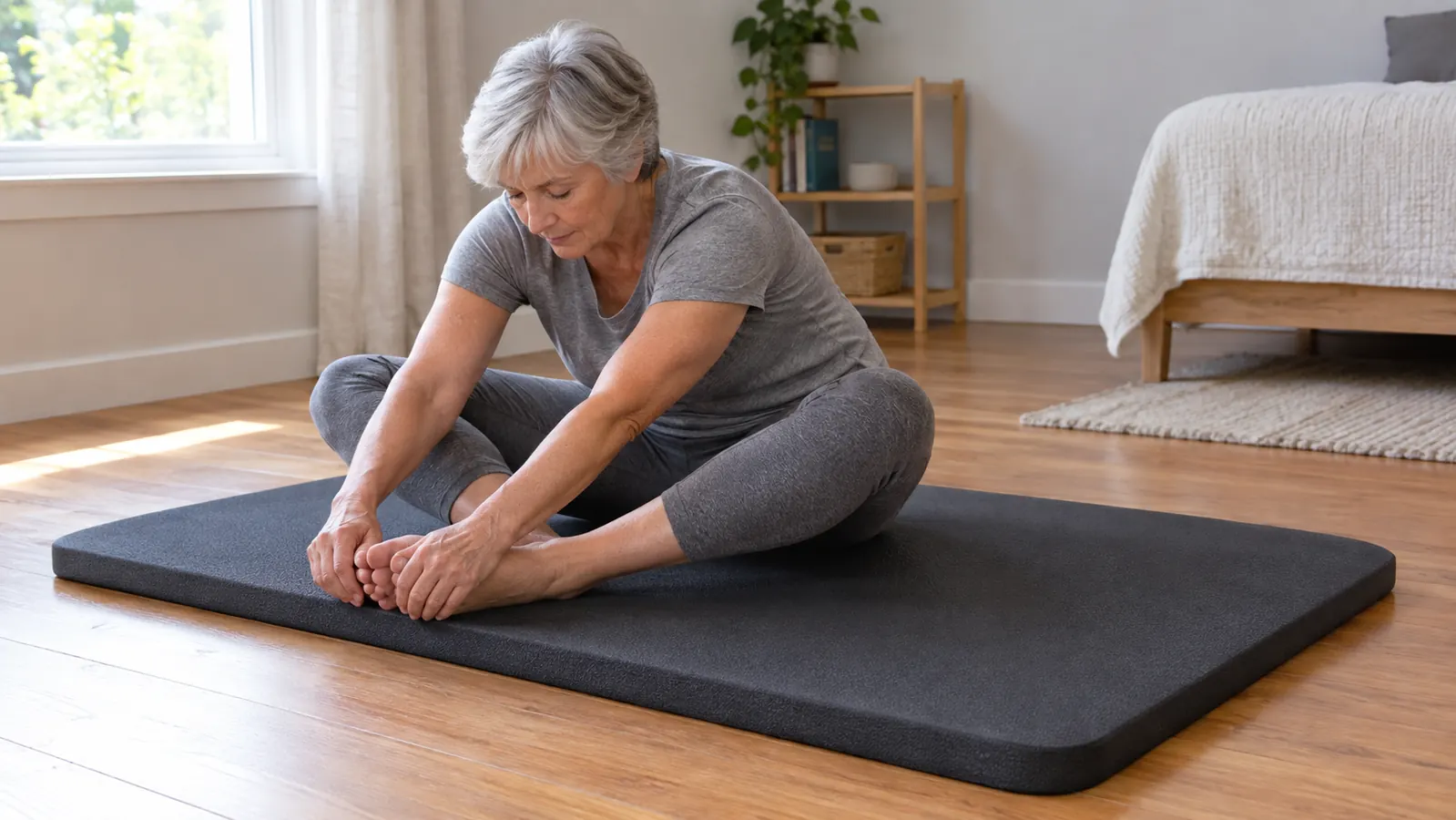
The first thing I noticed was kneeling. I do floor stretches after my walks, and on a bare hardwood floor my knees let me know about it. With a half-inch mat, the floor gives instead of my knee joint. The difference is not dramatic, it is consistent. I do not think about my knees anymore when I kneel down to pick up a dropped weight or to stretch. That is exactly the point of a mat this thick. It also makes it easier to get up from the floor, which is a skill I want to keep.
It takes the edge off your wrists
Planks and push-ups on the floor used to send a sharp reminder through my right shoulder, which I rehabbed after a fall in 2019. A thick mat spreads the pressure across my palm instead of concentrating it on the heel. I can hold a plank for thirty seconds now without feeling like I am punishing my wrists. The Fitvids mat is dense enough that my hands do not sink in too far, so my form stays put. That support lets me work longer without the ache that used to cut my sessions short.
It keeps your spine happy during core work
Lying on your back on a hard floor can leave your lower back feeling every seam in the wood. The mat provides a layer of give that lets me do gentle leg lifts and pelvic tilts without bracing against the floor. My spine stays in a neutral position because the surface is forgiving. I have noticed I am willing to do my core routine more often because it does not hurt to get down and up. Getting down and up is part of the exercise, and the mat makes that transition kinder.
It stops your feet from slipping
My small room has a smooth hardwood floor that gets slick when I wear socks. The mat's surface has a good grip, so my feet stay planted during standing balance exercises and light strength moves. I used to shuffle my feet to find traction; now I just stand and move. That stability matters more as I get older, because a fall is the thing I am trying to avoid. The grip also helps when I do side steps, so I can focus on my form.
It adds a layer of warmth over a cold floor
Hardwood floors hold the cold, especially in a room over an unheated crawl space. On a chilly morning, a bare floor makes my joints stiff before I even start. The Fitvids mat acts like a thin blanket. It does not warm the room, but it keeps the cold from traveling straight into my knees and elbows. That alone made me use the space more in winter. On the coldest days, I roll it out before I even start, just to have that barrier.
It lets you do floor exercises you would otherwise skip
When a floor is hard and cold, you find reasons to avoid kneeling, lying down, or rolling over. A thick mat removes those reasons. I now do a short floor routine three days a week that I would have skipped entirely last year. The mat makes the difference between a workout that feels like a chore and one that feels like a treat. The ease of getting down and up is the real gift. The mat has become the reason I keep the routine, not the obstacle to it.
It protects your hips when you roll over
Rolling from my back to my side during stretches used to dig the bone of my hip into the wood. With the mat, the pressure is cushioned, so I can shift positions without wincing. That might sound minor, but it means I actually do the full set of mobility moves instead of cutting them short. My left knee and my right shoulder both thank me for not guarding against the floor. Being comfortable on the floor means I am less likely to rush through the moves.
It reduces impact during standing moves
I do not jump, but I do step side to side and march in place. On a hard floor, every step sends a little shock up through my ankles and knees. The mat absorbs some of that impact, so my joints feel less jolted after a session. It is not a shock absorber like a running track, but it is a noticeable buffer that makes my workout gentler on my body. It is a small change that adds up to less wear on joints over years.
It makes cleanup easier
Sweat, dust, and the occasional water spill all land on the mat instead of soaking into the wood. I can wipe it down with a damp cloth in seconds. That means my workout space stays cleaner and I do not worry about damaging the floor. It also means the mat looks neat when I roll it up and tuck it in the closet, which matters in a room I also use for other things. Being able to clean it quickly means I do not skip my workout because the floor looks dirty.
It stores easily when you're done
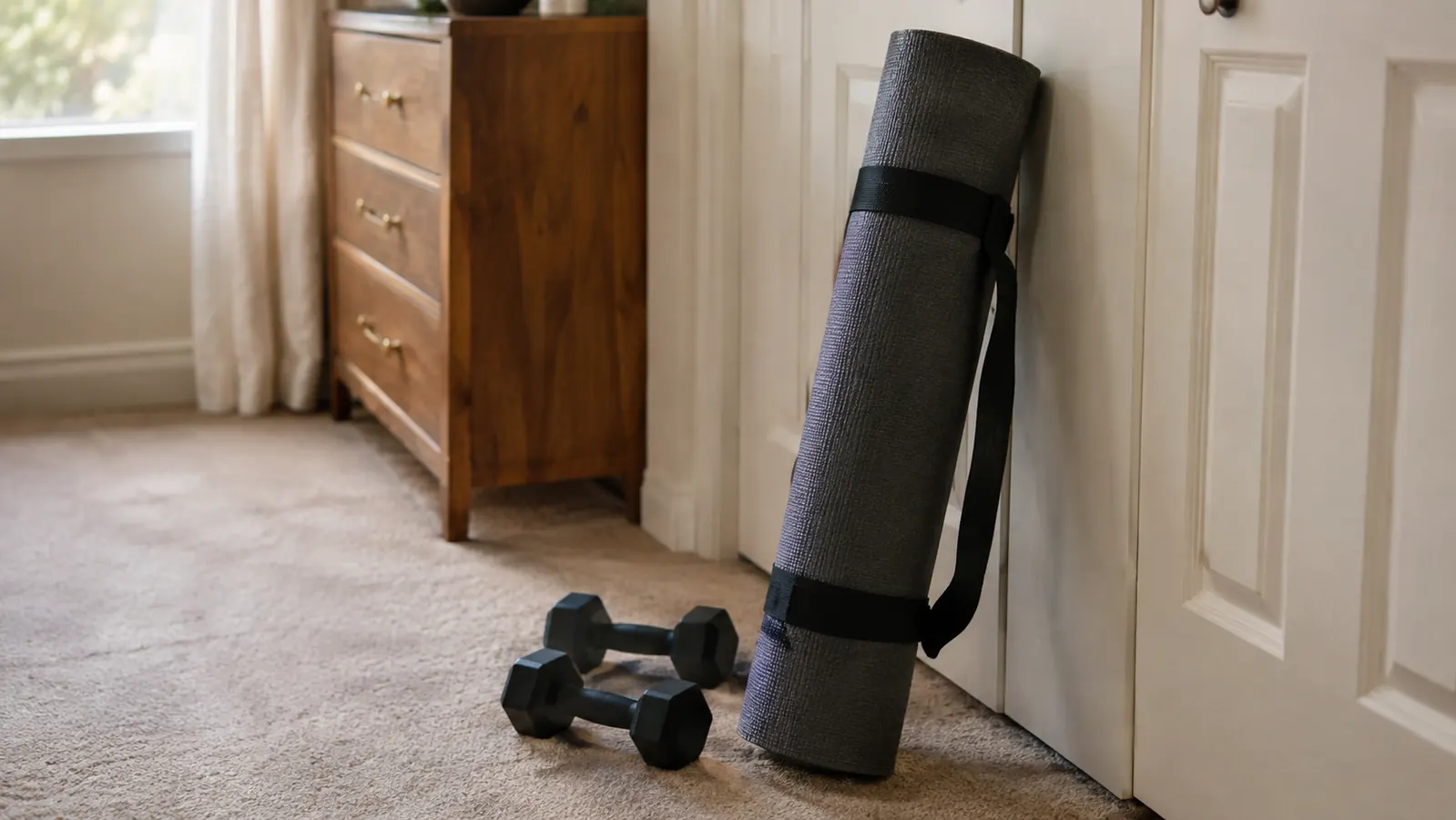
The Fitvids mat comes with a carrying strap, and it rolls up to a size that fits in my closet. I can have the whole thing out of the way in under a minute. Because it is not a permanent fixture, I am more likely to use the space for workouts and then put it away, keeping the room tidy. That convenience is what makes a habit stick. The strap makes carrying it to another room easy if I want to work out there.
What I'd Skip
If you already work out on a carpeted floor, a thick mat might be unnecessary. Carpet gives some cushion, and the mat would be extra weight to store. Also, if you do primarily standing exercises and never get on the floor, you may not need the extra thickness; a thinner mat might be enough. And if you have a very plush carpet, the mat could feel too soft and unstable for balance work. Be honest about your floor and your routine before you buy.
A half-inch of cushion sounds like nothing until you have done a month of knee-down work on hardwood. Then it feels like a good decision every single day.
Give your joints the support they deserve
The Fitvids mat is a simple, affordable way to protect your knees, wrists, and back during home workouts. It is still going strong after six months of daily use in my small room.
Amazon Check Today's Price on Amazon →